
Two luxury motorcoaches staged for group travel in Gainesville, FL - Benchmark Coachlines
Group Travel June 5, 2026 ยท 8 min read

Charter Bus vs. Motorcoach: What's the Difference?

People use the terms interchangeably, but a motorcoach and the service behind it are not the same as a basic charter bus. Here is what separates the two.

The Vehicle: Not Every Big Bus Is a Motorcoach

Start with the hardware. A motorcoach is a specific class of vehicle. It is the tall, 45-foot coach with passenger seating raised above a large luggage bay, reclining seats, climate control, and usually an onboard restroom. Think of the kind of vehicle that crosses three states comfortably.

A "charter bus" is a looser term. It can mean a motorcoach, but it can also mean a transit-style bus, a school bus pressed into private service, or an aging shuttle with vinyl bench seats. The word covers a wide quality range, which is exactly why it confuses people.

When you book group travel, the vehicle class affects everything - ride comfort, luggage capacity, restroom access, and how a long day feels by hour six. For long-distance nationwide charters, that difference is not cosmetic. It decides whether your group arrives rested or wrecked.

The build quality you cannot see matters as much as the seats you can. Air-ride suspension smooths out highway expansion joints that would jolt a transit bus. Better sound insulation lets people talk or sleep instead of shouting over road noise. These are the details that separate a coach engineered for distance from a bus designed for short city loops.

Age and upkeep tell the rest of the story. A 15-year-old coach with a fresh interior can still ride well if it is maintained properly, while a newer vehicle that is neglected will not. That is why the smart question is never just "is it a motorcoach" but "how is this specific vehicle cared for."

The Operator: A Chauffeur, Not Just a Driver

Here is where the real gap shows. We say it plainly: we are not a bus company, we are a customer service company. Our drivers are motorcoach operators, not bus drivers. There is a difference, and you feel it within the first five minutes.

A bus driver gets people from one stop to the next. A motorcoach operator manages an experience. They are dressed sharply, they greet your group by name when they can, they handle luggage, and they keep the cabin clean throughout the trip - not just at the start. That standard comes straight from the luxury black-car world.

That is the gap Benchmark Coachlines set out to close from the very beginning. We had watched charter clients put up with poorly dressed drivers and dirty vehicles for too long. A school outing or a corporate convention - either way, the operator sets the tone. The same care applies to school field trips and special events as it does to executive travel.

Consider what an operator actually manages over a full day. Hours-of-service rules, rest stops timed so the group is not stranded, fuel planning, and the dozens of small judgment calls that keep a trip on schedule. A driver who treats the job as steering does none of that thinking. An operator does it before you ever notice it needed doing.

Appearance is not vanity, either. A pressed shirt and a clean cabin signal that the same care is going into the parts of the trip you cannot inspect - the brakes, the maintenance log, the route plan. Sloppiness you can see usually rides alongside sloppiness you cannot. The reverse is true too.

Why the Distinction Matters for Your Group

It is easy to dismiss this as branding. It is not. The label your provider uses for themselves predicts the service you receive.

A company that calls its people "bus drivers" tends to deliver bus-driver service. A company that trains motorcoach operators tends to deliver more.

Picture a sports team on the road. A late, cramped, no-frills ride leaves players stiff and distracted before kickoff. A proper motorcoach with a professional operator lets them rest, focus, and arrive ready. That is the entire point of dedicated athletic team transportation - the trip should give the team an edge, not cost it one.

The same logic scales to big events. When we manage logistics for the nation's largest gatherings, including the Super Bowl over the last five years and the Republican National Convention, the vehicle and the operator are inseparable. One without the other is just a bus.

There is a cost angle too, and it usually runs the opposite way people expect. A cheaper basic bus that breaks down, arrives late, or leaves your group exhausted costs you far more than the price gap once you count the missed session or the bad first impression. The vehicle is a line item. The experience is the actual product.

This matters most when the stakes are public. A team arriving late, a wedding party stuck on the shoulder, a tour group venting online about a miserable ride - these are the failures people remember and repeat. The right coach and operator are not a luxury in those moments. They are insurance.

Matching the Right Coach to the Right Trip

Different trips call for different setups. A two-hour shuttle between a hotel and a convention hall does not need an onboard restroom. A two-day run to a national park does. Part of booking well is being honest about what the trip actually demands.

For sightseeing and vacation travel - Washington DC monuments, Niagara Falls, Orlando theme parks - groups want comfort, big windows, and storage for everyone's gear. Our nationwide destination and sightseeing trips are built around long hours in the seat, so the coach has to earn its keep mile after mile.

For travel agencies and tour operators building packages, the vehicle becomes part of the product. A polished coach and operator reflect on the agency's brand, not just ours. We structure travel agency and tour partnerships so the transportation strengthens the package instead of undercutting it.

Capacity planning is part of the match. A 56-seat coach is efficient for a full group, but a 30-person tour rattling around in one feels empty and costs more per head than it should. The right answer is the vehicle sized to the group, not the biggest coach on the lot. Honest sizing saves money and improves the feel of the trip.

Amenities should follow the itinerary, not a brochure. A wine-country day tour wants big windows and a smooth ride. A multi-day national parks run wants restroom access, luggage capacity, and comfortable recline for the long highway stretches. Matching features to the actual route is the difference between a coach that fits and one that just shows up.

How to Tell Which One You're Actually Getting

Words are cheap, so verify before you book. Ask for the year, make, and model of the specific vehicle assigned to your trip - not a stock photo of the nicest coach in the fleet. Ask whether it has a restroom, luggage bay, and reclining seats if those matter to you.

Then ask about the operator. Is the same person staying with your group for the whole trip? How are they dressed?

How is the coach cleaned between legs? The answers separate a genuine motorcoach service from a charter bus with a fancy name.

We are happy to answer all of it before you commit. Groups across Ocala and the surrounding area and beyond can call (352) 301-5301 to talk through the right coach for the trip. The first conversation tells you most of what you need to know.

Pay attention to how that first call feels, not just what it covers. A provider who asks about your group, your schedule, and what could go wrong is thinking like a partner. One who only quotes a number and pushes for a deposit is selling you a seat, not a trip. The difference is audible in the first five minutes.

Common Myths About Charter Buses and Motorcoaches

The first myth is that bigger always means better. It does not. A 56-seat coach carrying a group of 20 wastes money and feels cavernous. The right vehicle is the one matched to your headcount and route, not the largest one a provider can put in front of you.

The second myth is that all coaches are basically interchangeable, so price is the only thing that matters. Two vehicles with the same seat count can differ wildly in suspension, cleanliness, age, and the operator behind the wheel. Price reflects some of that, but only a clear conversation reveals the rest.

The third myth is that the driver is just along to steer. As we have covered, the operator manages safety, timing, comfort, and every small course correction across a long day. Treating that role as interchangeable with "bus driver" is exactly the gap that separates a forgettable trip from a smooth one. Knowing these myths going in makes you a sharper buyer.

Frequently Asked Questions

Is a motorcoach the same as a charter bus?

Not exactly. A motorcoach is a specific high-end vehicle class - tall, with a raised passenger deck, large luggage bays, reclining seats, climate control, and usually an onboard restroom. "Charter bus" is a broader term that can include motorcoaches but also transit buses or older shuttles. The word tells you less about quality than the vehicle class does.

Why do you call your drivers motorcoach operators?

Because the role is bigger than driving. Our operators are trained in the courtesy and professionalism you would expect from a luxury black-car service - sharp appearance, clean cabins kept clean throughout the trip, and attentive handling of your group.

That standard runs through everything we do, from a short corporate shuttle to a two-week long-haul tour. The title reflects the job, not just the seat.

Does a motorcoach have a restroom and luggage storage?

Most full-size motorcoaches include an onboard restroom, climate control, reclining seats, and a large undercarriage luggage bay. These features matter most on long-distance trips. For a short local shuttle they may be unnecessary, so we match the vehicle to the trip rather than overbuilding every run.

Which is better for a long-distance group trip?

For any trip over a couple of hours, a true motorcoach wins on comfort, storage, and restroom access. A basic charter bus can leave a group stiff and tired before they arrive.

For multi-vehicle or multi-day programs, our event transportation management keeps one operator with each group and one plan across the whole trip, so the experience stays consistent from departure to return.
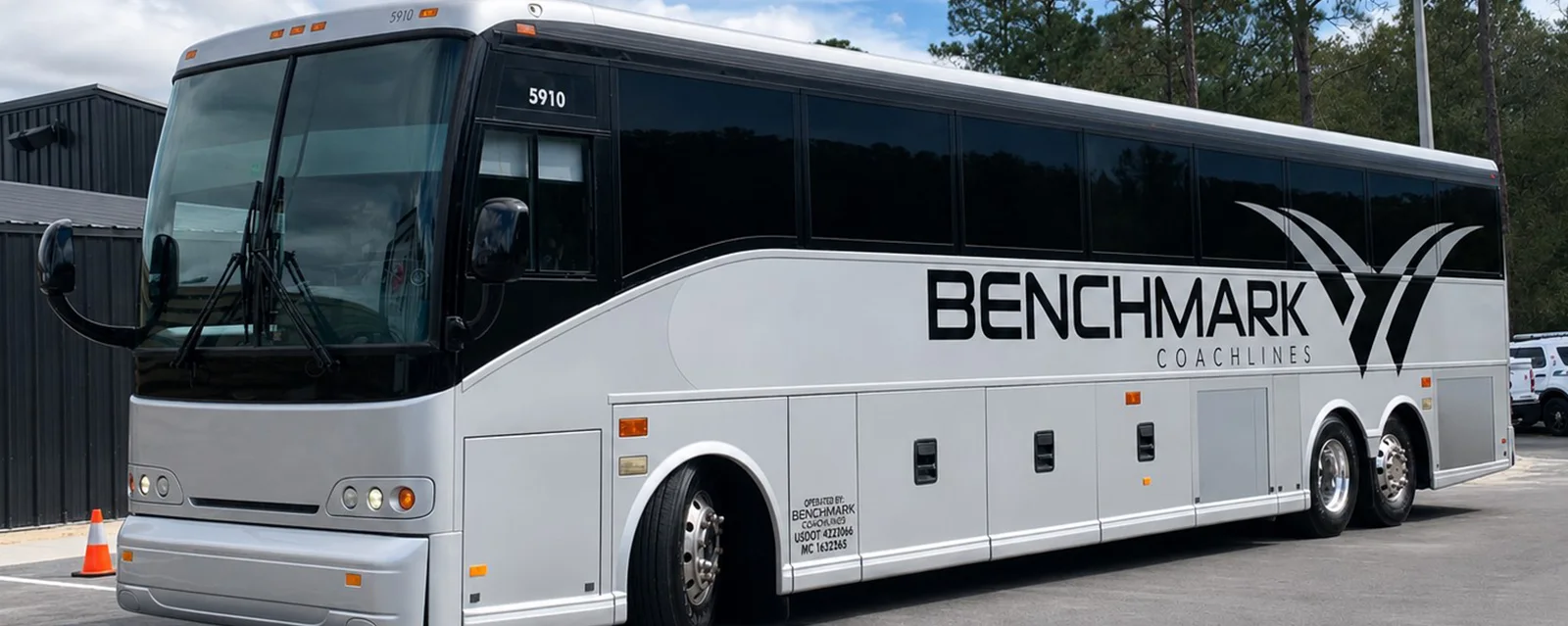
How do I confirm I'm getting a real motorcoach and not a basic bus?

Ask for the specific vehicle's year, make, and model, and confirm features like restroom, luggage bay, and reclining seats. Ask whether one operator stays with your group and how the coach is cleaned between legs. A provider serving riders across the Gainesville region should answer all of it without hesitation.

Planning a Group Trip?

Let our team build a custom quote and a plan that holds, from the first call to the final drop.

Call Us Request a Quote