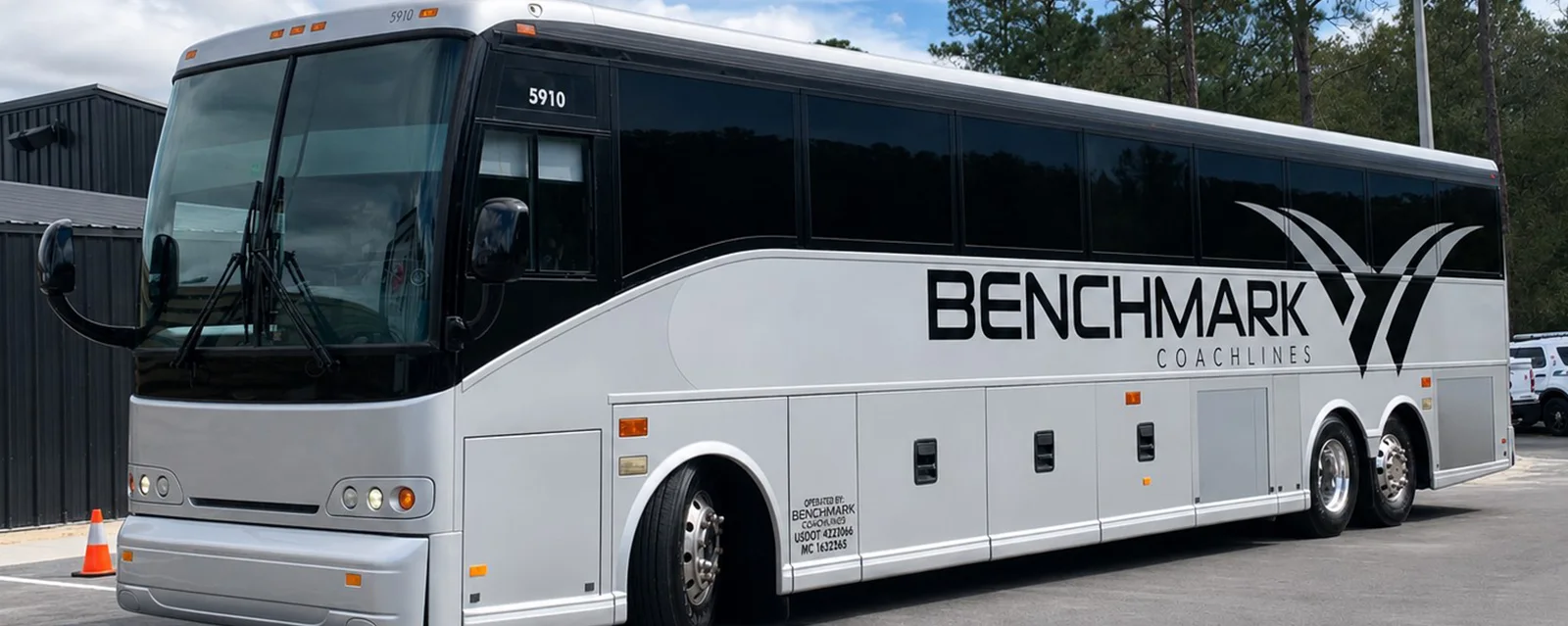
Carpooling looks cheaper on paper, but the real cost of gas, parking, and everyone's time adds up fast. Here is an honest comparison to help you choose between a charter bus rental and a caravan of cars.
The Question Every Group Organizer Faces
You have a group heading somewhere together. A wedding two hours away, a company retreat, a family reunion, or a game-day trip. Someone has to decide how everyone gets there. The two options usually come down to the same choice: rent a charter bus, or have people split into their own cars and carpool.
The carpool feels like the free option. Nobody writes a check, and everyone already owns a car. That surface-level math is what makes so many groups default to a caravan without really running the numbers. The honest answer is that both approaches have a place, and the right pick depends on your group size, your distance, and how much coordination you want to manage.
This post walks through the real trade-offs. We coordinate group transportation across Gainesville and the surrounding region, so we see how these decisions play out on both short hops and longer hauls.
Keeping the Group Together From Start to Finish
The biggest hidden cost of carpooling is fragmentation. The moment people split into separate vehicles, you lose control of the timeline. Cars get separated at lights, drivers miss turns, and half the group is standing at the destination waiting on the other half. For a wedding party or a corporate event with a start time, that lag creates real stress.
A charter bus keeps everyone in one place. Nobody gets lost, nobody has to relay directions between five phones, and the whole party experiences the trip together. That togetherness matters for the trip itself, too. Conversation, shared excitement, and downtime as a group all happen on the bus.
Groups planning multi-stop sightseeing and destination tours stay together across every stop instead of counting cars in a parking lot at each landmark.
There is a coordination benefit for the organizer, too. Managing one vehicle and one driver is far simpler than herding five volunteer drivers, mapping routes for each, and fielding "where are you" texts the whole way. One point of contact replaces a dozen.
Comfort, Productivity, and the Experience of the Ride
A personal car is fine for a short drive. Over an hour or two, the difference between a cramped sedan and a motorcoach becomes obvious. A luxury charter bus offers reclining seats, climate control, power and USB outlets, onboard restrooms, and room to move.
Drivers on a carpool are working the whole way. On a charter, the person who would have been driving gets to sit back with everyone else.
That freedom has practical value for business groups. A team can hold a meeting, review materials, or simply arrive rested rather than frazzled from navigating traffic. Companies moving staff to conferences and events use corporate and convention charters to turn travel time into productive time, which is impossible when everyone is scattered across separate cars watching the road.
The experience matters for social trips, too. A charter turns transit into part of the event rather than a chore to survive. For a milestone birthday, a reunion, or a group heading to a big game, riding together sets the tone before you even arrive.
Talk Through Your Group's Trip and Get a Real Quote
The best way to settle the charter-versus-carpool question is to compare actual numbers for your specific trip. Tell us your group size, your destination, and your dates, and we will give you one flat quote you can weigh against the true cost of gas, parking, tolls, and everyone's time in separate cars. Keeping your group together in a single vehicle is often simpler and cheaper than it first appears. Call Benchmark Coachlines at (352) 301-5301 or send us the details of your group trip and we will help you choose the right option.
Frequently Asked Questions
Is a charter bus really cheaper than everyone carpooling?
For larger groups and longer distances, a charter bus is frequently cheaper once you count every cost. Separate cars each burn fuel, pay tolls, and pay for parking, and one flat charter quote folds all of that into a single number you split across the whole group. For a tiny group on a short trip, a carpool is usually the cheaper choice. The break-even point typically arrives around three or more vehicles or a drive of an hour or longer.
How many people does it take to make chartering worth it?
There is no hard cutoff, but the value climbs sharply once you would otherwise need three or more cars. At that point the coordination, parking, and fuel savings tend to outweigh the booking cost. Groups of a dozen or more traveling any real distance almost always come out ahead with a charter on both cost and convenience.
What about parking at the destination?
A charter bus drops your group at the entrance and handles parking separately, so no one pays per-car garage fees or circles for a space. Carpools face a space for every vehicle, which adds cost and time at busy venues. For stadiums, downtown events, and popular attractions, avoiding the parking scramble is one of the clearer wins for chartering.
Can a charter bus keep our group on the same schedule?
Yes, and that is one of its main advantages over a caravan. Everyone departs and arrives together on one vehicle, so there is no waiting on stragglers or relaying directions between cars. For weddings, corporate events, and anything with a fixed start time, that single shared schedule removes a lot of stress.